
Last Updated: November 17, 2026
Quick Summary
Red light therapy has substantial clinical research behind it, including controlled trials on skin, pain, and tissue repair, while alkaline water science is far thinner, with most claims resting on small studies and mechanistic theory rather than consistent clinical outcomes. No published trial tests the two together, so any combined protocol is plausible rather than proven.
- Red light in the 630-660 nanometer range targets skin, while near-infrared at 800-850 nanometers reaches deeper tissue.
- Excessive light dose produces a documented biphasic response with diminishing or reversed effects.
- Blood pH is held near 7.35 to 7.45 and is not meaningfully shifted by drinking alkaline water.
- Urine pH changes show normal kidney regulation, not evidence of a therapeutic effect.
- Ask for wavelength, irradiance in mW/cm², treatment area, and total dose in J/cm² before comparing devices.
Table of Contents
- What the Science Actually Says About Red Light Therapy and Alkaline Water
- How Photobiomodulation Works: Wavelengths, Mitochondria, and Dose
- Red Light Therapy Benefits: What the Evidence Supports
- Alkaline Water Benefits: Separating Physiology From Marketing
- Red Light Therapy Side Effects, Safety, and Who Should Skip It
- Red Light Therapy at Home vs. a Clinic: Device Specs That Matter
- Combining Red Light Therapy and Alkaline Water: What’s Proven, What’s Plausible
- Book a Session and See How the Protocol Fits Your Goals
- Frequently Asked Questions
What the Science Actually Says About Red Light Therapy and Alkaline Water
Red light therapy and alkaline water science occupy very different positions on the evidence spectrum, and that gap matters if you are deciding where to spend your time and money. Alkaline water science is far thinner, with most claims resting on small studies and mechanistic theory rather than consistent clinical outcomes. (Source: biphasic dose response)
Below, we break down what each intervention actually does at the cellular level, where the evidence is strong, where it is speculative, and how to read a device spec sheet without getting sold on marketing language.
The short version: one of these is a legitimate therapeutic modality with real dosing parameters. The other is a hydration product with modest supporting data and a lot of overreach.
How Photobiomodulation Works: Wavelengths, Mitochondria, and Dose
Photobiomodulation is the process by which specific wavelengths of red and near-infrared light are absorbed by cellular photoacceptors, primarily cytochrome c oxidase in the mitochondria, triggering a cascade that affects energy production and inflammation signaling.
The mechanism is well characterized in laboratory work. For a deeper look at the mitochondrial side of this, see our breakdown of how red light therapy affects mitochondria.
Red and Near-Infrared Light: What the Wavelengths Do
Wavelength determines depth and target. Red light in the roughly 630-660 nanometer range penetrates superficially and is used mainly for skin concerns. Near-infrared light, generally 800-850 nanometers and above, reaches deeper tissue and is the band most studied for muscle, joint, and pain applications. If you want a plain-language comparison of how different light bands behave, our guide to blue light versus red light covers the spectrum side by side.
Irradiance, Dose, and Treatment Duration
Dose is where most at-home users go wrong. Effective photobiomodulation depends on irradiance measured in milliwatts per square centimeter, treatment time, and the total energy delivered in joules per square centimeter. More is not better; there is a documented biphasic response where excessive dose produces diminishing or reversed effects (ncbi.nlm.nih.gov). A device with high irradiance can deliver a therapeutic dose in minutes, while a low-power panel may need far longer.
Red Light Therapy Benefits: What the Evidence Supports
The strongest red light therapy benefits cluster in three areas: skin appearance, musculoskeletal pain, and recovery from certain tissue injuries. The evidence is not uniform across them, and the quality of studies varies considerably.
Skin Rejuvenation, Collagen, and Wrinkles
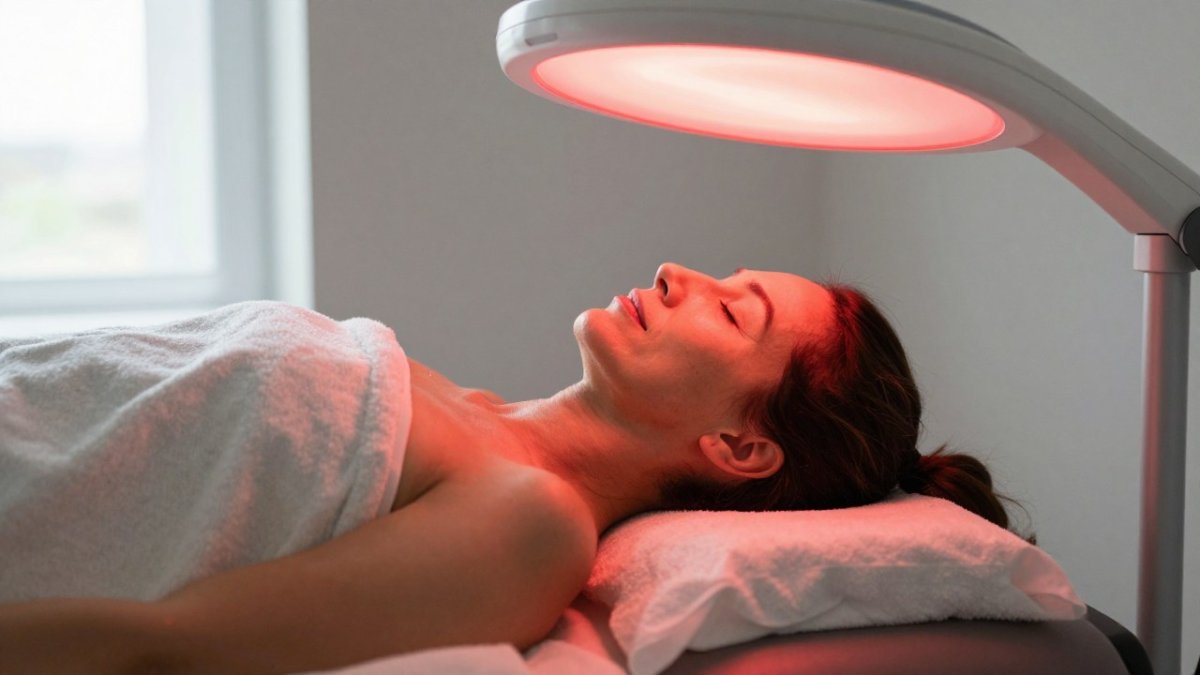
Controlled trials on facial photobiomodulation generally report improvements in skin texture, fine lines, and erythema, with collagen density as a proposed mechanism. Results are modest and cumulative, typically requiring multiple sessions over weeks. It is not a substitute for dermatologic treatment of significant sun damage.
Pain, Inflammation, and Tissue Repair
Chronic pain is the best-supported application. Multiple randomized trials and systematic reviews report reductions in pain scores for knee osteoarthritis, neck pain, and tendinopathy compared with sham treatment. For readers specifically weighing this against osteoarthritis symptoms, our article on red light therapy for osteoarthritis reviews the trial landscape in detail.
Alkaline Water Benefits: Separating Physiology From Marketing
Alkaline water benefits are real but narrow, and the marketing around them routinely overstates what the physiology supports. Alkaline water is drinking water with a higher pH than typical tap water, usually achieved through ionization or added minerals. To evaluate any claim about it, you need three things the marketing rarely provides: what pH actually measures, how the body handles an alkaline load, and what the human studies actually measured.
What pH Actually Measures, and What It Doesn’t
pH is a logarithmic scale of hydrogen ion concentration (the EPA). A drop of one pH unit means ten times more acidity; a rise of one unit means ten times more alkalinity. Typical tap water sits near neutral, around pH 7, while commercial alkaline waters are usually marketed in the pH 8 to 9.5 range. That number describes the water in the bottle, not the environment inside your body.
How the Body Regulates Blood pH
Blood pH is held in a tight window, generally about 7.35 to 7.45, by three overlapping systems: bicarbonate buffering in the blood, respiratory control of carbon dioxide through breathing, and renal regulation of bicarbonate and hydrogen ions by the kidneys. These systems respond within minutes to hours and are not meaningfully shifted by drinking water, alkaline or otherwise. The claim that alkaline water “alkalizes your body” conflates the pH of a beverage with the pH of blood, and no controlled human study has demonstrated a sustained change in blood pH from ordinary consumption. If blood pH actually moved outside that window, it would be a medical emergency, not a wellness outcome.
What the Human Research Actually Shows
Small studies have reported that water at a higher pH may reduce pepsin activity, an enzyme implicated in reflux-related throat irritation. To see the hydration products and protocol we offer, read Get Ready for Maximum Hydration. Bone health and exercise-performance claims rest largely on small or short-term studies, and the broader literature has not produced consistent clinical outcomes. (Source: Federal Trade Commission guidelines)
How to Read an Alkaline Water Study
When you encounter a claim, ask four questions. Was the study in humans or in cells and animals? Was it randomized and controlled, or observational? How large was the sample, and how long did it run? And did the outcome measure something clinically meaningful, such as reflux symptoms, or only a surrogate marker like urine pH?
Watch out: urine pH is sometimes presented as proof that alkaline water “works.” Urine pH reflects what the kidneys are excreting to keep blood pH stable, so a change in urine pH is evidence of normal regulation, not evidence of a therapeutic effect.
Red Light Therapy Side Effects, Safety, and Who Should Skip It
Side effects reported in the research are generally described as mild and temporary, though individual responses vary and you should discuss any concerns with a qualified professional.
That said, this is not a risk-free modality for everyone. People taking photosensitizing medications, those with a history of skin cancer or photosensitivity disorders, and anyone pregnant should consult a physician before starting.
Red Light Therapy at Home vs. a Clinic: Device Specs That Matter
An at-home device and a clinical unit are not interchangeable, and the difference is measurable. Here is what to compare before you buy or book:
| Specification | Why It Matters | What to Ask |
|---|---|---|
| Wavelength | Determines tissue depth and target | Exact nanometer range, not “red light” |
| Irradiance | Sets treatment time needed | mW/cm² at the treatment surface |
| Treatment area | Coverage per session | Full body vs. spot applicator |
| Total dose | Drives the biphasic response | J/cm² per session |
| Session length | Practical adherence | Minutes for a therapeutic dose |
At-home panels are convenient, but their output varies by device, so checking the irradiance specification matters. Clinical settings may offer calibrated output and full-body coverage, depending on the equipment used.
Combining Red Light Therapy and Alkaline Water: What’s Proven, What’s Plausible
Here is the part most guides skip. There is no published clinical trial testing red light therapy and alkaline water together as a combined protocol. Anyone claiming a synergistic effect is reasoning from mechanism, not from evidence. That absence is itself the most important finding for this keyword, because the two interventions sit at very different points on the evidence spectrum, and combining them does not average those positions out.
Grading the Evidence Side by Side
The two interventions are not comparable in study quality. Red light therapy has randomized controlled trials and systematic reviews across skin, pain, and tissue repair, with defined dosing parameters in joules per square centimeter and reported sham controls. Alkaline water has a small number of human studies, mostly short-term and often using surrogate markers, with the clearest signal in laryngopharyngeal reflux and no consistent clinical outcome for systemic benefits.
Where the Physiology Overlaps, and Where It Doesn’t
What is plausible: light therapy addresses mitochondrial energy production and local inflammation at the treatment site, while adequate hydration supports circulation, temperature regulation, and cellular function generally. Good hydration is a reasonable baseline for anyone undergoing any therapy, and no one needs alkaline water specifically to achieve it. What is not established: that alkaline water amplifies photobiomodulation outcomes, improves light penetration, or changes the dose-response curve.
How to Evaluate a Combined Protocol
Treat the combination as two separate interventions, each evaluated on its own merits. For the light half, ask for wavelength, irradiance in milliwatts per square centimeter, treatment area, and total dose per session. For the water half, ask what outcome the product is claimed to improve and what human evidence supports that specific outcome.
Watch out: a combined protocol can create a false impression of evidence, because a well-documented intervention placed next to a weakly supported one makes the weaker claim feel validated. Evaluate each component separately before accepting the package.
Book a Session and See How the Protocol Fits Your Goals
The research on red light therapy for skin, pain, and recovery is more substantial than the research on alkaline water, which has a narrower and less consistent evidence base.
If you want to see how a structured protocol fits your own goals, schedule a session and we can discuss your goals and the details of our approach.
Frequently Asked Questions
Is there any scientific proof behind red light therapy?
There is real clinical research behind red light therapy, though the quality varies by use. Studies on photobiomodulation show measurable effects on collagen production, wound healing, and joint pain, and the approach is used in dermatology and physical therapy settings. Evidence for skin rejuvenation and pain is stronger than evidence for fat loss or systemic conditions. Many trials are small or short, so researchers call for larger, standardized studies. Treat it as a supported but still-developing therapy rather than a proven cure for any single condition.
Is there scientific proof behind alkaline water?
The alkaline water science is much thinner than the marketing suggests. Your body tightly regulates blood pH regardless of what you drink, so alkaline water does not meaningfully change it. Small studies suggest possible benefits for hydration and acid reflux symptoms, and early hydrogen water research looks at oxidative stress, but results are preliminary and often from small samples. It is generally safe for most people, but claims that it prevents disease or neutralizes acidity in the body go beyond what current evidence supports.
What should you avoid when using red light therapy?
Skip red light therapy over suspicious moles, open wounds, or areas with active infection, and avoid staring directly into the LEDs without protective eyewear. Do not combine it with photosensitizing medications or topical drugs such as retinoids without asking a clinician first, since light exposure can trigger reactions. Follow the device’s stated treatment duration and frequency rather than extending sessions to chase faster results. If you are pregnant, taking medication that increases light sensitivity, or being treated for a skin condition, get medical clearance before starting.
Can you combine red light therapy and alkaline water for better results?
No published clinical trial has tested the two together as a combined protocol, so any claim that they work better as a pair is theoretical. The plausible link is hydration: well-hydrated tissue supports circulation and recovery, and red light therapy works on cellular energy in the mitochondria. That makes drinking enough water sensible alongside light sessions, but it does not prove alkaline water adds anything beyond ordinary hydration. Ask for the specific evidence behind any combined protocol before paying for it.

