

Table of Contents
- How Red Light Therapy Works for Joint Pain
- Red Light Therapy for Knee Pain: Addressing Your Most Common Joint
- Red Light Therapy for Arthritis: Managing Chronic Joint Inflammation
- Red Light Therapy Treatment Time: Dosing and Frequency Guidelines
- Red Light Therapy Safety Precautions: What You Need to Know
- What Research Shows About Red Light Therapy and Joint Health
- Getting Started: A Home-Use Protocol for Joint Pain Relief
- Frequently Asked Questions
Last Updated: October 10, 2026
How Red Light Therapy Works for Joint Pain
Red light therapy for joint pain uses specific wavelengths of light to penetrate deep into tissue and stimulate cellular repair through photobiomodulation. The light activates mitochondria in your cells, which produce more ATP, the energy molecule your body needs to heal.
When red and near-infrared light reaches damaged joint tissue, it reduces inflammation and triggers cellular responses that support tissue repair and improve circulation, which is why athletes and people managing chronic joint conditions use it for drug-free relief.
The wavelengths that matter most for joint pain fall between 600 and 1,000 nanometers: red light (600-700 nm) penetrates surface tissues, while near-infrared light (700-1,000 nm) reaches deeper into joints and bone to address inflammation and support recovery.
The depth of light penetration depends on wavelength and irradiance (power density). Higher irradiance means more energy reaches your tissue, but the sweet spot for joint healing sits around 10-50 milliwatts per square centimeter. Too little does nothing; too much causes temporary warmth without added benefit.
Red Light Therapy for Knee Pain: Addressing Your Most Common Joint
Knee pain responds exceptionally well to red light therapy for joint pain because the knee is accessible to light penetration.
Red light therapy addresses knee structures by reducing inflammation and supporting collagen production, which keeps cartilage healthy and flexible, literally rebuilding joint tissue.
Treatment typically runs 10-20 minutes per session, three to five times weekly, allowing cells to accumulate benefits. Many people notice reduced stiffness within two weeks of consistent use.
Knees are easy to position under a therapy lamp at home, and you can treat both simultaneously for balanced recovery, making this one of the most practical home applications.
Avoid treating over open wounds, active infections, or areas with recent surgery without consulting your healthcare provider. Red light therapy can increase circulation, which might complicate certain healing processes in the immediate post-surgical window.
Red Light Therapy for Other Joints: Hands, Hips, Shoulders, and Beyond
Red light therapy works on any accessible joint, with treatment duration adjusted based on tissue depth and accessibility.
Hands and wrists: Treat 8-12 minutes per session, 4-5 times weekly. Arthritis in the hands often shows improvement within 2-3 weeks.
Hips: Treat 15-20 minutes per session, 4-5 times weekly, for 8-12 weeks.
Shoulders: Treat front and back of the shoulder 12-15 minutes per area, 4-5 times weekly.
Elbows and ankles: Treat 10-15 minutes per session, 4-5 times weekly.
Spine and lower back: Treat 15-20 minutes per session, but evidence is less robust than for peripheral joints.
General principle: Shallower joints need less treatment time; deeper joints need more.
Red Light Therapy for Arthritis: Managing Chronic Joint Inflammation
Red light therapy for arthritis targets chronic inflammation in the joint space. Rather than masking pain with medication, it addresses the inflammatory cascade itself.
Both osteoarthritis and rheumatoid arthritis benefit from reduced inflammation. The light stimulates your body’s natural anti-inflammatory pathways and reduces pro-inflammatory markers in the joint.
Consistent use of red light therapy for joint pain shows promise for long-term arthritis management. Combining light therapy with movement and proper hydration maximizes results.
Treatment frequency for arthritis typically requires more consistency than acute pain. Three to five sessions weekly, sustained over 8-12 weeks, produces the best outcomes. Some people maintain improvement with two sessions weekly after reaching their initial goals.
Red Light Therapy Treatment Time: Dosing and Frequency Guidelines
The ideal treatment time depends on your device’s irradiance and your specific condition. A standard protocol for joint pain runs 10-20 minutes per session.
Frequency matters as much as duration. Three times weekly is the minimum for noticeable results; five times weekly accelerates improvement, especially for chronic arthritis.
Here’s a practical framework for getting started:
- Acute joint pain: 15 minutes, 4-5 times weekly for 4-6 weeks
- Chronic arthritis: 15-20 minutes, 3-5 times weekly, ongoing
- Recovery and maintenance: 10-15 minutes, 2-3 times weekly
- Performance enhancement: 10-15 minutes, 3-4 times weekly
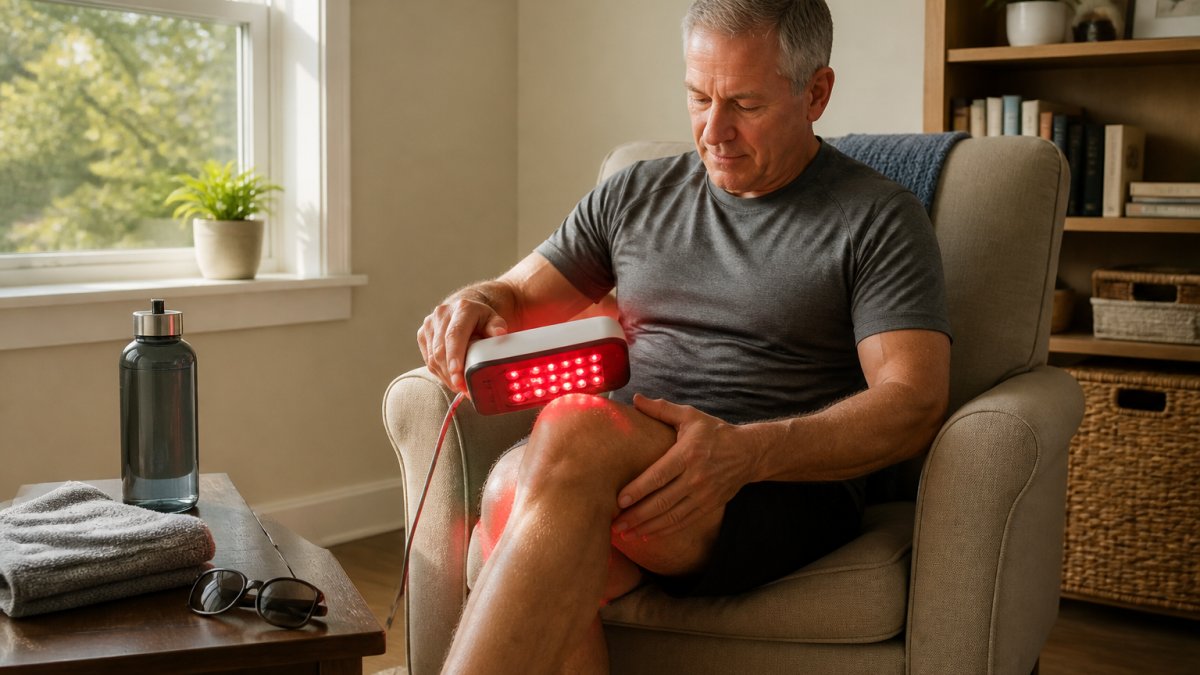
Irradiance levels between 10 and 50 milliwatts per square centimeter work best for joint applications. Higher power means shorter treatment times.
Consistency beats intensity. A person doing 15 minutes three times weekly will see better results than someone doing 30 minutes once weekly. Your cells respond to repeated stimulus over time, not one massive dose.
Red Light Therapy Safety Precautions: What You Need to Know
Red light therapy for joint pain is non-invasive and generally safe, but certain precautions ensure proper use and identify when professional guidance is necessary.
The most common side effect is temporary redness or warmth at the treatment site, which fades within minutes to hours and indicates increased circulation.
Avoid treating directly over the eyes, as direct exposure can cause temporary discomfort. Always position devices to treat joints, not facial areas.
Medications and Photosensitivity
Certain medications increase skin photosensitivity, meaning your skin reacts more intensely to light exposure (the FDA). If you take any of the following, consult your healthcare provider before starting red light therapy:
- Antibiotics: Tetracyclines (doxycycline, minocycline), fluoroquinolones (ciprofloxacin, levofloxacin), and sulfonamides can increase photosensitivity.
- Nonsteroidal anti-inflammatory drugs (NSAIDs): Ibuprofen, naproxen, and prescription NSAIDs may increase light sensitivity in some individuals.
- Retinoids: Prescription acne medications (isotretinoin, tretinoin) and vitamin A derivatives significantly increase photosensitivity.
- Diuretics: Water pills used for blood pressure or heart conditions can make skin more reactive to light.
- Antifungal medications: Griseofulvin and some azole antifungals increase photosensitivity.
- Chemotherapy agents: Certain cancer treatments increase light sensitivity; consult your oncologist before any light therapy.
If you’re unsure whether your medication interacts with red light therapy, ask your pharmacist or physician. They can review your specific drug and dose.
When to Consult a Healthcare Provider Before Starting
Red light therapy is contraindicated or requires professional clearance in these situations:
- Active cancer or recent cancer treatment: Red light therapy increases cellular activity and circulation. If you have active cancer or are undergoing chemotherapy or radiation, consult your oncologist. Some practitioners avoid red light therapy within 6-12 months of cancer treatment completion.
- Pregnancy: While red light therapy poses no known direct risk to pregnancy, individual circumstances vary. Hormonal changes, skin sensitivity, and underlying conditions during pregnancy warrant a conversation with your obstetrician before beginning treatment.
- Unexplained or worsening joint pain: If your joint pain is new, rapidly worsening, or accompanied by fever, swelling, redness, or warmth that suggests infection or inflammatory disease, see a healthcare provider first. Red light therapy is not a substitute for diagnosis. Conditions like septic arthritis, acute rheumatoid arthritis flares, or fractures require medical evaluation before any home treatment.
- Thyroid disorders: The thyroid is light-sensitive. If you have hyperthyroidism, Graves’ disease, or thyroid cancer, avoid treating the neck area and consult your endocrinologist.
- Lupus or other photosensitive autoimmune conditions: Systemic lupus erythematosus (SLE) and some other autoimmune diseases increase photosensitivity. Consult your rheumatologist before starting red light therapy.
- Recent joint surgery or injection: If you’ve had surgery, steroid injection, or hyaluronic acid injection in a joint within the past 4-6 weeks, check with your surgeon or orthopedist before treating that area. Red light therapy’s circulation-boosting effects might interfere with early healing or injection efficacy.
Device Safety and Proper Use
Not all red light therapy devices deliver the same dose. Irradiance (power density, measured in milliwatts per square centimeter) varies widely. Devices rated 10-50 mW/cm² are appropriate for joint pain; devices below 5 mW/cm² are unlikely to produce therapeutic effects, and devices above 100 mW/cm² may cause temporary discomfort without added benefit.
Always follow the manufacturer’s instructions for your specific device. Treatment time, distance from skin, and frequency recommendations vary by device. If your device manual specifies a maximum treatment time or frequency, do not exceed it. More is not always better; excessive light exposure can cause temporary skin irritation without improving outcomes.
Side Effects and When to Stop
Most people tolerate red light therapy without issue. Possible temporary side effects include:
- Mild redness or warmth at the treatment site (normal and expected)
- Temporary eye strain if light reflects into the eyes (reposition the device)
- Mild headache if treating near the head (reduce treatment time or frequency)
- Skin irritation if you have very sensitive skin (reduce treatment time by 5 minutes)
If you experience persistent skin irritation, blistering, severe redness lasting more than a few hours, or any unexpected reaction, stop treatment and consult a healthcare provider. These responses are rare but warrant professional evaluation.
Red light therapy is safe for most people, but it is not appropriate for everyone. If you have active cancer, unexplained joint symptoms, photosensitivity medications, pregnancy, or autoimmune conditions, consult your healthcare provider before starting. When in doubt, a brief conversation with your doctor takes minutes and prevents complications.
What Research Shows About Red Light Therapy and Joint Health
The evidence base for red light therapy for joint pain continues to grow, with studies documenting photobiomodulation’s effects on inflammation, collagen synthesis, and pain perception at the cellular level.
Research consistently shows that red light therapy reduces inflammatory markers in joint tissue, with measurable decreases in cytokines and other inflammation indicators documented in blood work and tissue samples.
Collagen production increases significantly with red light exposure. Since cartilage is primarily collagen, this directly supports joint structure and resilience by stimulating fibroblasts.
Red light therapy improves circulation, delivering more oxygen and nutrients to damaged joints and supporting natural healing while reducing metabolic stagnation in chronic conditions.
The evidence quality matters. Well-designed studies with proper controls show consistent benefits. Anecdotal reports are encouraging, but controlled research provides the foundation for confident recommendations.
Getting Started: A Home-Use Protocol for Joint Pain Relief
Starting red light therapy at home requires just three decisions: which device to use, where to treat, and how often to commit.
Begin with your most painful joint. Treat that area consistently for 4-6 weeks before adding additional joints.
Your first-month protocol:
- Select a device with 10-50 mW/cm² irradiance
- Treat your primary joint 15 minutes per session
- Aim for 4 sessions weekly (Monday, Wednesday, Friday, Sunday works well)
- Track your pain level weekly on a simple 0-10 scale
- Expect noticeable improvement by week 3-4
After the first month, assess your progress. If pain has decreased by 30-50%, maintain your current frequency. If improvement is minimal, increase to 5 sessions weekly.
Consistency matters more than perfection. Missing one or two sessions weekly won’t derail progress. Missing three or more weekly sessions slows results noticeably.
Red light therapy for joint pain offers a drug-free path to managing inflammation and supporting tissue repair.
Frequently Asked Questions
How often should you use red light therapy for joint pain?
Most treatment protocols recommend 3-5 sessions per week for 10-20 minutes per session, though frequency depends on your specific condition and device specifications. Starting with 3 sessions weekly and observing your response over 2-4 weeks helps establish what works for your body. Consistency matters more than intensity; regular, moderate use typically produces better results than sporadic long sessions. Always follow your device manufacturer’s guidelines and consult a qualified healthcare provider to tailor frequency to your individual needs.
How long does it take for red light therapy to help joint pain?
Some people report mild relief after 1-2 weeks of consistent use, but meaningful improvements in joint pain and inflammation typically emerge over 4-8 weeks. Chronic conditions like arthritis may require 8-12 weeks of regular treatment before noticeable changes occur. Results vary based on pain severity, joint location, device power output, and individual healing capacity. Tracking your pain levels and mobility weekly helps you measure progress objectively and decide whether to continue or adjust your treatment protocol.
Is red light therapy safe for people with rheumatoid arthritis?
Red light therapy is generally considered safe for rheumatoid arthritis when used appropriately, though anyone with an autoimmune condition should consult their rheumatologist before starting treatment. Red light therapy does not suppress immune function the way some medications do, making it a potential complement to conventional care. However, certain medications or active infections may create contraindications. A qualified healthcare provider can review your specific situation and help you determine whether red light therapy for joint pain fits safely into your overall treatment plan.
Can you use red light therapy while pregnant?
Red light therapy has not been extensively studied in pregnancy, so most healthcare providers recommend avoiding it as a precaution. While red light itself is non-ionizing and non-invasive, the safety profile during pregnancy remains unclear. If you are pregnant and experiencing joint pain or inflammation, discuss all treatment options, including red light therapy, with your obstetrician or midwife before proceeding. They can help you weigh the potential risks and benefits and recommend safer alternatives if needed.
