
Quick Summary
Red light therapy may reduce pain for some people with knee osteoarthritis, though research is still limited and results vary by device, dose, and schedule. It works best as a supplement to standard care rather than a replacement. Talk with a clinician before starting, especially if you take light-sensitizing medications or have skin or eye conditions.
- Most studies on knee osteoarthritis report short-term pain reductions, but many trials are small.
- Record pain on a 0 to 10 scale and joint stiffness before starting treatment.
- A drop of about two pain points sustained over several weeks is a change worth noting.
- Light intensity drops quickly with distance, so keep the joint at the device’s specified distance.
- Check with a doctor first if you are pregnant, have epilepsy, or take light-sensitizing medications.
Table of Contents
- What Red Light Therapy Is and How It Works
- What the Evidence Says About Red Light Therapy for Osteoarthritis Knee Pain
- Joint Pain, Morning Stiffness, and Mobility: Realistic Outcomes
- How to Use Red Light Therapy for Arthritis: A Step-by-Step Protocol
- Step 1: Record a baseline before the first session
- Step 2: Match the device to the joint
- Step 3: Position the joint and set the distance
- Step 4: Keep session length and frequency within the manufacturer’s range
- Step 5: Keep a simple log for four to six weeks
- Step 6: Decide what counts as a meaningful change
- Red Light Therapy Dangers, Side Effects, and Who Should Avoid It
- Choosing the Best Red Light Therapy for Arthritis and Where It Fits With Standard Care
- Booking Your Consultation to Discuss Light Therapy for Your Joints
- Frequently Asked Questions
Red Light Therapy for Osteoarthritis Symptoms: What Works
Last Updated: November 11, 2026
What Red Light Therapy Is and How It Works
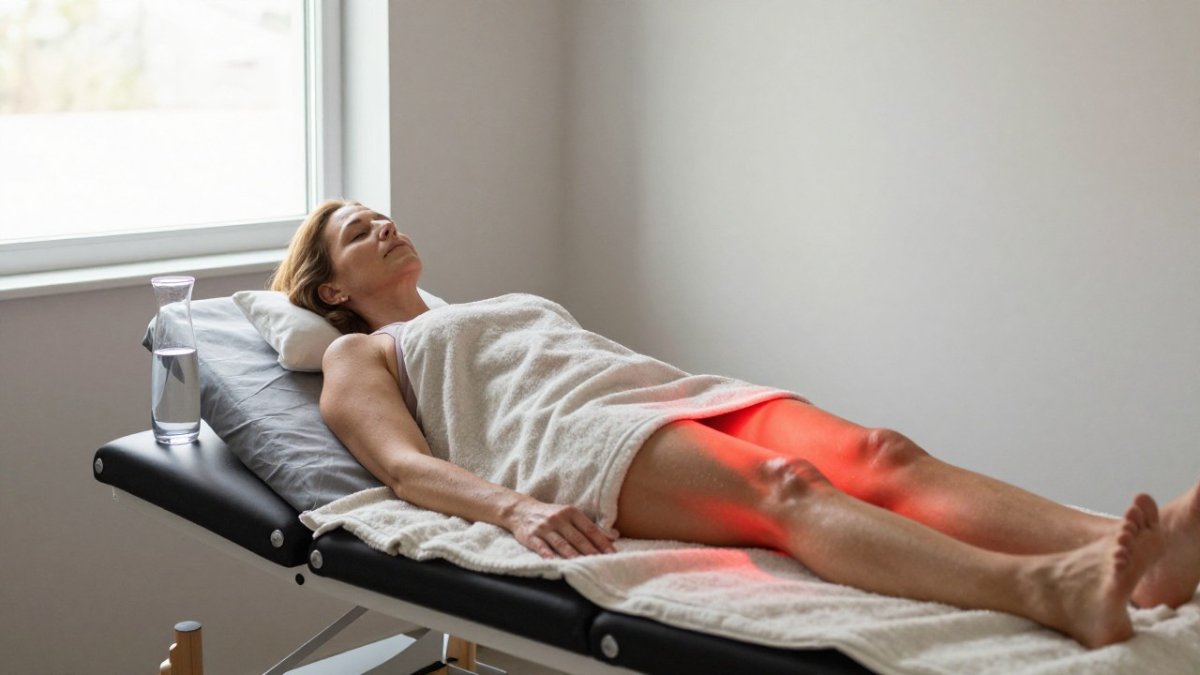
Red light therapy is a non-invasive treatment that exposes the body to red and near-infrared light.
Photobiomodulation is the scientific name for the process.
Watch out: Light therapy is not a replacement for a diagnosis. Joint pain can have many causes, so a qualified clinician should evaluate persistent symptoms first.
Wavelength, irradiance, and fluence explained
Three terms show up in nearly every discussion of light therapy:
- Wavelength: The color of light, measured in nanometers. Red light sits around 620 to 700 nm, and near-infrared light sits above that.
- Irradiance: The power delivered per square centimeter, measured in milliwatts per square centimeter.
- Fluence: The total energy delivered to the tissue over a session, often expressed in joules per square centimeter.
Knowing these numbers helps you compare devices. Two devices can look similar but deliver very different doses.
What the Evidence Says About Red Light Therapy for Osteoarthritis Knee Pain
Research on red light therapy for osteoarthritis has grown over the past decade, but many studies are small. A National Center for Complementary and Integrative Health overview of photobiomodulation research is a useful starting point for understanding what has and has not been tested in humans. For the underlying mechanism, see how red light affects cellular energy.
Most of the studies that look at knee osteoarthritis report short-term reductions in pain. Results vary by device, wavelength, dose, and treatment schedule, which makes it hard to give one clear answer.
Separating osteoarthritis research from rheumatoid arthritis and general pain studies
Many light therapy studies combine different conditions. Rheumatoid arthritis is an autoimmune disease, while osteoarthritis is a wear-and-tear condition of the joint cartilage. Results from one do not automatically apply to the other.
When reading the evidence, check:
- Whether the study focused on osteoarthritis specifically
- Whether the trial used a sham (placebo) device
- How long participants were followed
Joint Pain, Morning Stiffness, and Mobility: Realistic Outcomes
Many people with osteoarthritis hope for relief from joint pain, morning stiffness, and limited movement.
Realistic expectations matter. A reasonable goal is to track pain on a simple 0 to 10 scale before and after several weeks of consistent use.
Plan for a trial period of several weeks rather than expecting quick results. Talk with your provider if symptoms do not improve.
How to Use Red Light Therapy for Arthritis: A Step-by-Step Protocol
Most people researching this topic want to know what a session actually looks like, not just that light therapy exists. The framework below is meant as a discussion guide for a conversation with your clinician, not a prescription. The exact settings depend on the device, and the manufacturer’s instructions and your provider’s advice should override anything general written here.
Step 1: Record a baseline before the first session
Before you start, write down three measures and keep the same method for every entry:
- Pain: a 0 to 10 rating for your affected joint at rest and after a typical day of activity.
- Morning stiffness: how many minutes it takes before the joint feels comfortable to move.
- Function: a simple timed test, such as how long you can walk a set distance or how many times you can stand from a chair in 30 seconds.
A baseline taken on a good day and a bad day will look very different, so record a few days’ worth of readings before you begin if you can.
Step 2: Match the device to the joint
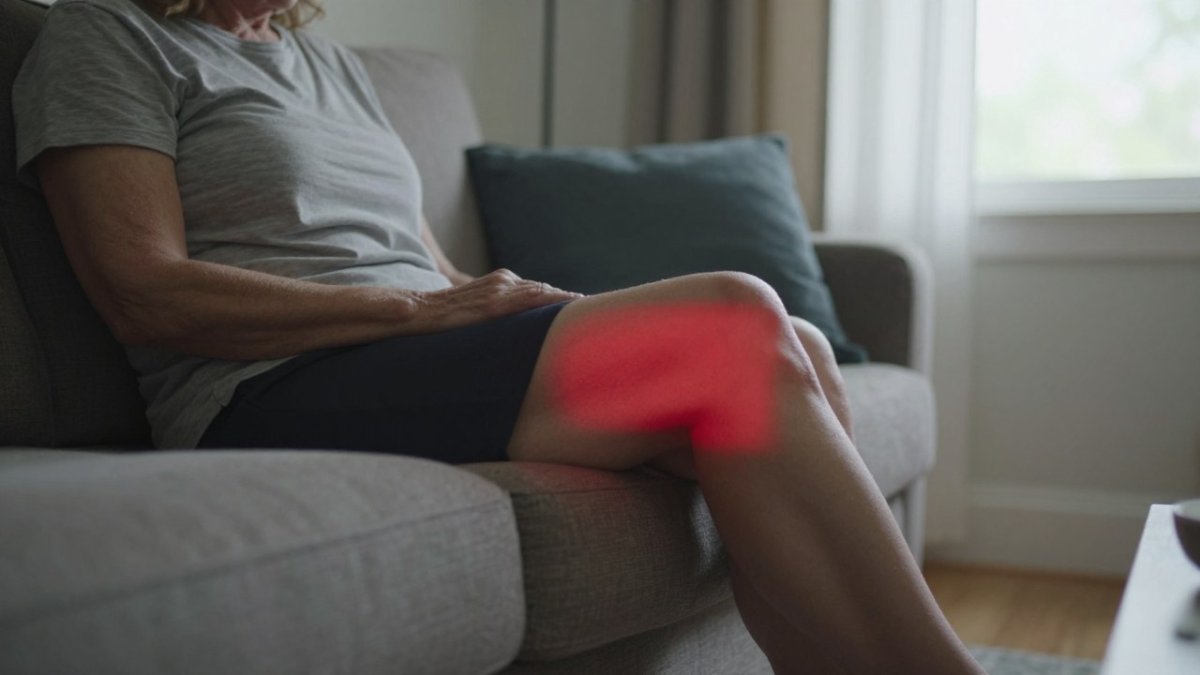
For knee osteoarthritis, the treatment area is usually the front, sides, and back of the knee, and for hand or hip osteoarthritis the device must reach the joint itself. Full-body panels and handheld or wrap-style devices deliver very different exposure. A panel at a distance of several feet spreads a relatively low irradiance across a large area, while a handheld unit placed close to the skin concentrates more power in a small spot.
Step 3: Position the joint and set the distance
Place the joint at the distance specified in the device guide. Light intensity drops quickly as distance increases, so moving a device a few inches can change the delivered dose substantially. Keep the joint still during the session, and cover or protect the eyes as the device instructions require. Do not look directly at the light source.
Step 4: Keep session length and frequency within the manufacturer’s range
Many home protocols use sessions of a few minutes per treatment area, with several sessions per week. Longer is not automatically better. Doses above the manufacturer’s range are not shown to improve results and may increase the chance of skin irritation. Use a timer and log each session.
Step 5: Keep a simple log for four to six weeks
A useful log records the date, the treatment area, session length, distance, and the three baseline measures. Review it every one to two weeks. Changes in stiffness or walking tolerance often show up before changes in pain scores, so note all three.
Step 6: Decide what counts as a meaningful change
Decide in advance what result would justify continuing, adjusting, or stopping.
Watch out: Do not use light therapy to mask a sudden increase in swelling, warmth, redness, or pain, because these can signal a problem that needs prompt medical evaluation.
The steps below summarise the home-use protocol the article describes, with the timing or frequency it gives for each step.
| Step | What to do | Time or frequency |
|---|---|---|
| Record a baseline | Rate pain 0 to 10, note morning stiffness and a timed function test | Record several days before starting |
| Match the device to the joint | Check the device reaches the joint and ask for irradiance at a stated distance | Confirm before first session |
| Position and set distance | Place the joint at the distance in the device guide and protect your eyes | Light intensity drops quickly with distance |
| Keep sessions within range | Use a timer and stay within the manufacturer’s range | A few minutes per area, several sessions per week |
| Keep a log | Record date, area, length, distance and the three baseline measures | Review every one to two weeks over four to six weeks |
| Decide what counts as change | Set the threshold for continuing or stopping in advance | About two points on the pain scale sustained over several weeks |
Red Light Therapy Dangers, Side Effects, and Who Should Avoid It
Red light therapy is generally considered low risk at the doses used in published studies and in consumer devices, but low risk is not the same as no risk. The main concerns are skin reactions, eye exposure, and interactions with certain medications or medical devices. The checklist below is organized by the situation you may be in.
Common, usually temporary effects
- Skin redness or warmth in the treated area, which typically fades within hours.
- Mild heat sensation, which varies with device type. Near-infrared devices can feel warmer than red-only devices even at similar visible output.
- Eye discomfort or headache if the eyes are exposed to bright light, which is why protective eyewear matters.
If redness persists beyond a day or blistering occurs, stop use and seek medical advice.
Eye safety
Bright LED and laser-based devices can cause eye strain or, with high-powered sources, injury. Use the protective eyewear supplied with the device, keep closed eyes covered where the instructions say to, and do not stare at the emitter. People with existing eye conditions, including those who have had retinal surgery or have a retinal disease, should check with an eye specialist before use.
Skin conditions and photosensitivity
Check with a clinician before treating skin that is actively inflamed, infected, or unhealed. Use with caution if you have a history of skin cancer, a personal or family history of melanoma, or a condition that makes your skin react strongly to light. Some people with lupus or porphyria have photosensitivity and should be evaluated first.
Medications that increase light sensitivity
Several commonly prescribed drugs can make skin more sensitive to light (the FDA). Examples include certain antibiotics such as tetracyclines and fluoroquinolones, some diuretics, and certain drugs used for acne or psoriasis. Review your full medication list with your pharmacist or prescriber before starting light therapy, even if your condition seems unrelated to the medication.
Implanted devices
Red light is generally considered safe with implanted devices, but near-infrared therapy has not been studied in every device type. Tell your provider if you have a pacemaker, defibrillator, neurostimulator, or other implant, and ask whether treating over the implant site is appropriate.
Pregnancy and seizure disorders
There is limited human research on light therapy during pregnancy, so most clinicians recommend discussing it first. People with epilepsy or photosensitive seizure disorders should avoid flickering or pulsed light settings unless a clinician has approved them, because flashing light can trigger seizures in susceptible individuals.
Who should talk to a doctor first
- People who are pregnant or may be pregnant
- People taking light-sensitizing medications
- People with a history of skin cancer, active skin lesions, or photosensitive conditions
Watch out: A device’s marketing claims do not replace a medical screening, so treat unexplained symptoms as a reason to see a clinician rather than a reason to increase the dose.
Choosing the Best Red Light Therapy for Arthritis and Where It Fits With Standard Care
Red light therapy works best as a supplement to standard osteoarthritis care, not a replacement. Standard care often includes exercise, weight management, physical therapy, and medications your doctor recommends.
Readers comparing options can review the osteoarthritis treatment options from the Arthritis Foundation for background on the wider set of choices.
When comparing providers or devices, look at:
Our team is happy to explain the options. Learn more about red light therapy from Trifecta Light Center and the science behind blue versus red light before you decide.
Booking Your Consultation to Discuss Light Therapy for Your Joints
If you are considering light therapy for joint pain, a consultation is the best first step. You can schedule a consultation at Trifecta Light Center at a time that fits your routine.
Ready to talk through your joint pain goals? Book a visit with Trifecta Light Center to see whether red light therapy fits your needs.
Frequently Asked Questions
Can red light therapy reverse osteoarthritis?
No current evidence shows that red light therapy reverses osteoarthritis or repairs the joint’s structural damage. Studies, including a number of small trials and reviews, suggest it may reduce pain and improve stiffness for some people, mostly in the short term. Osteoarthritis is progressive, so light therapy is best viewed as a possible symptom-management option alongside standard care. Talk with a physician, physical therapist, or other qualified clinician before relying on it for joint problems.
Does red light therapy help osteoarthritis pain and stiffness?
Some clinical studies report reduced pain and improved joint stiffness in people with knee osteoarthritis, but results vary widely between trials. Benefits appear more consistently in the short term than as lasting change. Study quality, device settings, and treatment duration all differ, which makes it hard to predict results for any one person. A consultation with a qualified clinician can help you decide whether it is worth trying for your symptoms.
What are the downsides of using red light therapy?
Red light therapy is generally considered low risk, but it is not risk-free for everyone. Possible downsides include eye irritation if the light is viewed directly, skin sensitivity, and no proven benefit for every user. People who are pregnant, take photosensitizing medications, or have certain skin or eye conditions should check with a clinician first. Cost and time commitment are also practical downsides to weigh before starting.
How long does it take for red light therapy to help joint pain?
Study timelines vary, and many trials that reported benefits measured changes over several weeks of repeated sessions. Some people notice short-term relief sooner, while others notice no change. Results depend on the condition, device, dose, and consistency of use. Track pain and stiffness in a simple log so you can compare what you feel over time and discuss it with your clinician.

