
Last Updated: November 16, 2026
Quick Summary
3D body scanning for weight loss programs captures circumference measurements, body shape, and volume changes across the whole body, so progress becomes visible even when the scale refuses to move. A common scanning interval during an active weight-loss program is every four to eight weeks, using the same scanner and consistent conditions each visit.
- A 3D body scan uses cameras or infrared sensors to build a digital model of your body.
- DEXA measures bone density and body composition with low-dose X-rays; a 3D scan measures surface shape.
- Book scans at the same time of day and wear the same form-fitting clothing each visit.
- Phone-camera scanning apps are convenient but less precise, so treat app numbers as directional.
- Ask how scan images and 3D models are stored, who can access them, and whether you can request deletion.
Table of Contents
- Why the Scale Misses What 3D Body Scanning Shows
- How 3D Body Scanning Works and What It Measures
- 3D Body Scan vs. DEXA Scan: Which Fits Your Goals
- What a 3D Body Scan Costs and How to Find a Provider
- How Often to Get a 3D Body Scan During Weight Loss
- Choosing a 3D Body Scan App for Between Visits
- Limitations, Privacy, and Body-Image Considerations
- Book a Baseline 3D Body Scan at Trifecta Light Center
- Frequently Asked Questions
Why the Scale Misses What 3D Body Scanning Shows
A bathroom scale reports one number: total mass. It cannot tell you whether you lost fat, gained muscle, or simply shifted water weight overnight. That single figure often stalls for weeks even when real change is happening underneath.
3D body scanning for weight loss programs solves that blind spot. It captures circumference measurements, body shape, and volume changes across the whole body, so progress becomes visible even when the scale refuses to move. At Trifecta Light Center, we use Styku 3D full body scanning alongside metabolic analysis because the scale alone tells too small a story.
Below, we’ll show you exactly how these scans work, what they cost, how often to scan, and where the technology genuinely falls short.
How 3D Body Scanning Works and What It Measures
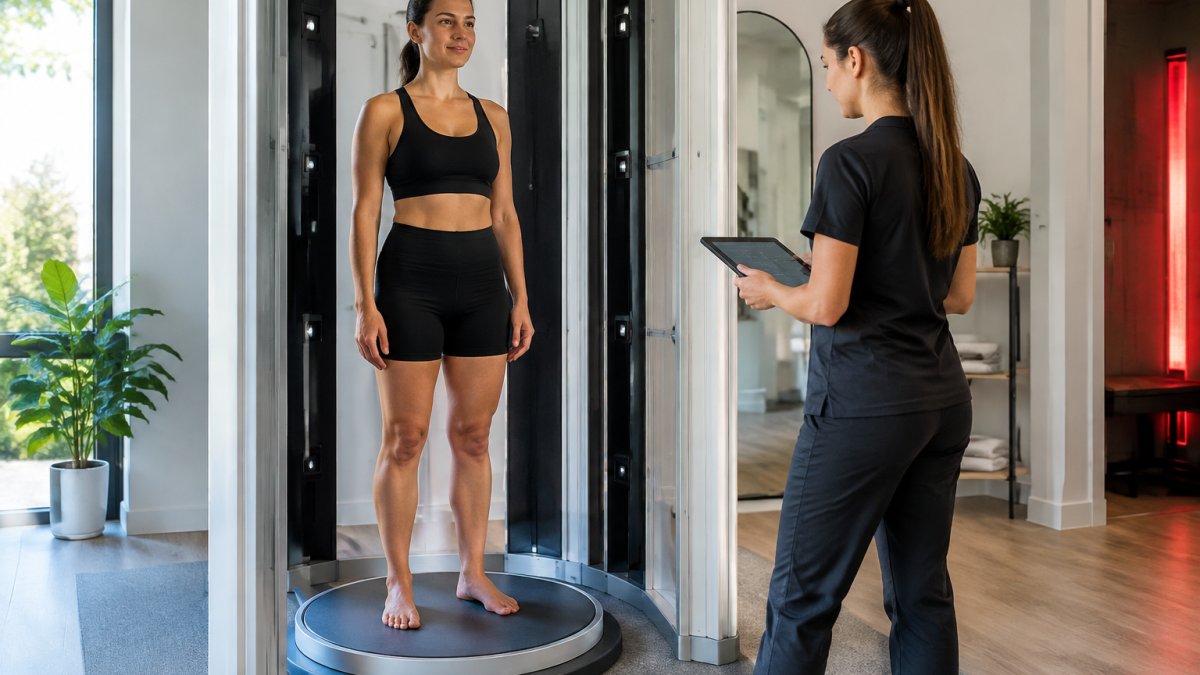
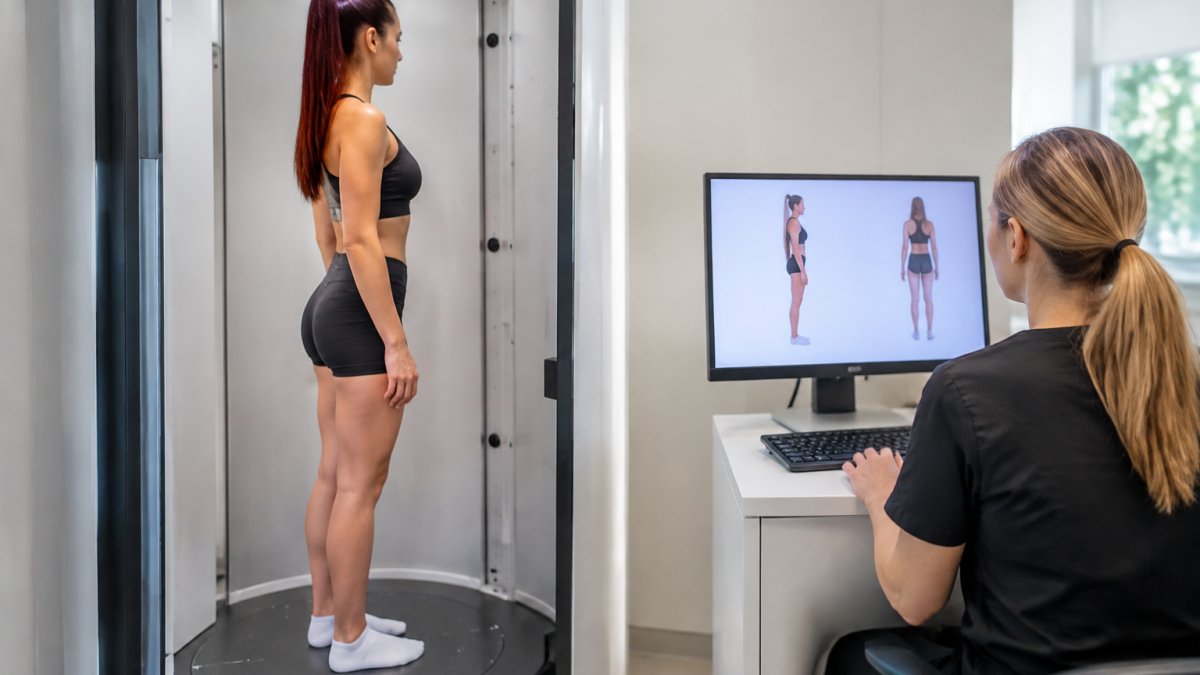
A 3D body scan is a non-invasive measurement process that uses cameras or infrared sensors to build a digital model of your body. You stand still on a platform, the sensors rotate or fire in sequence, and software stitches the data points into a 360-degree model.
The process is non-invasive and requires no injections. You can see your whole body in 3D 360 to understand exactly what the scan captures before you commit.
Body Shape, Measurements, and Composition Data
A 3D body scan can output circumference and surface measurements, depending on the system used. Some systems estimate body fat percentage and lean muscle mass from those shapes.
The 3D Avatar and Progress Comparison
Your scan produces a 3D avatar you can rotate and inspect. When you scan again later, the software overlays the two models side by side. This progress comparison shows fat distribution shifts and body contour changes that a mirror and a scale both miss.
3D Body Scan vs. DEXA Scan: Which Fits Your Goals
DEXA measures bone density and body composition using low-dose X-rays, and it remains a clinical standard for bone mass and fat distribution. A 3D body scan measures surface shape and circumference, not internal tissue directly.
| Feature | 3D Body Scan | DEXA Scan |
|---|---|---|
| Technology | Cameras or infrared sensors | Low-dose X-ray |
| Best for | Shape, measurements, visual progress | Bone density, fat and lean mass |
| Radiation | None | Minimal |
| Frequency | As often as monthly | Typically limited by referral |
| Visual output | 3D avatar and comparison | Report and images |
A 3D scan can suit frequent fitness tracking, while DEXA is the clinical option when bone mass data is needed. Many people use both for different reasons.
What a 3D Body Scan Costs and How to Find a Provider
Cost is the first practical question most people ask, and it is where most guides go vague. Pricing for a 3D body scan depends on the provider, the scanner used, and whether the scan is bundled with coaching or a broader program. Phone-camera scanning apps are generally the lowest-cost route, but they trade precision for convenience. For current pricing at Trifecta Light Center, visit our website or request a quote.
Always confirm what a session includes before you book, since a scan alone, a scan with a report, and a scan with a coaching conversation can be priced differently.
Provider type matters as much as price. In-clinic scanners, such as the Styku system used at Trifecta Light Center, use camera-and-sensor setups. Gym-based scans are convenient and often cheaper but may be run by staff with limited training in measurement error. Phone-camera apps are useful for between-visit trends but should not be treated as clinical measurements. A practical approach is to use one professional scanner as your source of truth and an app for the weeks in between.
To find a provider, ask these questions before booking:
- Which scanning technology and model does the studio use, and what does the manufacturer say about its measurement precision?
- Does the price include a trained consultation, and who reviews the results with you?
- Can you export your scan data, including circumference measurements and the 3D model, so you can compare across visits or providers?
- What is the studio’s protocol for clothing, posture, and time of day, and will they keep it consistent between your scans?
- How are images and models stored, who can access them, and can you request deletion?
Watch out: a provider that promises perfect accuracy or pushes a single scan as a diagnosis is a warning sign. Honest studios will describe their precision in ranges and explain what the scan cannot measure.
If cost is the barrier, ask providers whether they offer multi-scan packages. If access is the barrier, a phone-camera app plus an occasional professional scan is a reasonable compromise, as long as you compare like with like and do not mix app numbers with studio numbers in the same trend line.
How Often to Get a 3D Body Scan During Weight Loss
A common scanning interval during an active weight-loss program is every four to eight weeks. That interval is long enough for real measurement change to appear and short enough to keep motivation steady. Scanning weekly can produce variation from water retention, posture, and clothing, which may be hard to interpret.
What most guides skip is the repeatable scan protocol. A scan is only useful as a comparison if the conditions match, so treat each session like a measurement in a lab rather than a casual photo op. The controls that matter most are time of day, clothing, hydration, posture, and the scanner itself.
A practical protocol looks like this:
- Book scans at the same time of day, ideally morning before a meal and after using the restroom, so hydration and food volume are similar each time.
- Wear the same form-fitting clothing each visit, or ask the studio whether they provide a standard garment. Loose clothing adds volume the scanner will read as body shape.
- Stand in the same position and follow the technician’s cues exactly. Foot placement and arm position change circumference readings.
- Keep hydration roughly consistent in the 24 hours before a scan. A heavy sweat session or a salty meal the night before can shift readings.
- Use the same scanner and, where possible, the same technician. Different models and setups are not directly comparable.
- Record the conditions alongside the results, so a surprising change can be checked against what was different that day.
Watch out: mixing a morning scan with an evening scan, or a hydrated day with a dehydrated one, can create a change that looks like fat loss but is really water and timing. If a result looks implausible, check the protocol before you change your program.
A common pattern is to scan at baseline, again at four weeks to confirm the protocol is working, then every six to eight weeks during active loss. Once you move into maintenance, spacing scans every two to three months is usually enough to catch drift without turning the scale or the scanner into a source of anxiety. If you are also working on nutrition and recovery between visits, you can maximize your wellness efforts with complementary support that keeps your program consistent.
Choosing a 3D Body Scan App for Between Visits
A 3D body scan app lets you log measurements, photos, and habits between professional scans so your next comparison has context. The best apps sync with your scan reports and show trends rather than single readings.
What most guides miss is that phone-camera apps are not the same as studio scanners. Mobile phone camera scanning is convenient but less precise, so treat app numbers as directional, not clinical. Use the app for weight tracking, goal tracking, and habit streaks; use the studio scan for accurate measurement change.
If you want to see what between-visit progress tracking looks like in practice, explore what if you could see what your scale can’t and how it fits a longer program.
Limitations, Privacy, and Body-Image Considerations
No scanner is perfect. 3D body scanning estimates composition from surface shape, so it can drift when posture changes or when clothing differs between sessions. It is not a diagnostic device, and it does not replace medical assessment for obesity-related health risks.
Privacy deserves real attention. Ask how scan images and 3D models are stored, who can access them, and whether you can request deletion. Consent should be explicit, and you should know before you undress for any scan.
Body-image considerations matter just as much. Seeing a 3D avatar can be motivating for some people and distressing for others. If numbers tend to trigger harsh self-criticism, tell your provider and set boundaries on what you review. For more context on body scanning and wellness, browse our wellness blog.
A common mistake is treating scan results as a verdict. They are a tool for spotting trends, nothing more.
Book a Baseline 3D Body Scan at Trifecta Light Center
Your first scan is your baseline, and everything after it is comparison. Without that starting point, later results have nothing to measure against.
At Trifecta Light Center, we use Styku 3D full body scanning alongside Pnoe breath analysis and full-body red light therapy. When you are ready, schedule your baseline appointment and start measuring what the scale leaves out.
The scale will keep giving you one number. You can keep guessing what it means, or you can see the full picture. Trifecta Light Center offers Styku 3D full body scanning, Pnoe breath analysis, and red light therapy in one wellness studio designed around real progress tracking. Get started with Trifecta Light Center and build a baseline you can actually measure against.
Frequently Asked Questions
Can a 3D body scan measure body fat accurately?
It can give a useful estimate, but not a lab-grade one. 3D body scanning estimates body fat percentage and fat distribution from surface measurements and built-in equations, so it tracks change well across repeated scans. For a single absolute number, DEXA remains the reference method. Treat scan results as a trend line, not a diagnosis, and review them with a qualified professional.
Is a 3D body scan better than weighing yourself?
For tracking body composition change, usually yes. A scale cannot tell whether a lost pound came from fat or lean muscle mass, and it misses fat distribution and waist measurement shifts entirely. A 3D body scan captures body shape, circumference changes, and a 360-degree model you can compare over time. The scale is still useful for daily weight tracking; the scan explains what the weight change actually is.
How much does a 3D body scan cost?
3D body scan cost varies by provider, region, and whether the scan is bundled with a coaching or medical weight loss program. Some facilities price a single scan separately and discount a series of follow-ups. Ask what is included, whether a consultation comes with it, and whether repeat scans are priced lower. Contact Trifecta Light Center directly for current pricing.
How often should you get a 3D body scan while losing weight?
Every four to eight weeks fits most weight-loss programs, because meaningful measurement change needs time to show above normal scan-to-scan variation. Scanning weekly tends to produce noise rather than insight. Keep conditions consistent: same time of day, similar clothing, same posture. Your provider can adjust the interval based on your rate of change and goals.

