

Last Updated: November 14, 2026
Quick Summary
Inflammation reducing foods for joint pain include fatty fish, leafy greens, colorful produce, nuts, seeds, olive oil, turmeric, and ginger, which supply compounds that help calm inflammatory processes linked to joint discomfort. Aim for oily fish two to three times weekly and build color into every plate. Food is a support tool, not a treatment, so get a proper diagnosis first.
- Aim for oily fish varieties two to three times weekly, since lean white fish carries far less omega-3.
- Build a plate of half vegetables and colorful produce, a quarter lean protein, and a quarter whole grains.
- Limit heavily processed foods, sugary drinks, refined carbohydrates, fried foods, processed meats, and excess alcohol.
- Keep portions sensible: about 3 to 4 ounces of cooked fish, 1 ounce of nuts, and 1 to 2 tablespoons of olive oil.
- Note pain and stiffness on a 0 to 10 scale once a week to review with a clinician or dietitian.
Table of Contents
- Why Inflammation-Reducing Foods Matter for Joint Pain
- The 7 Best Inflammation-Reducing Foods for Joint Pain
- Anti-Inflammatory Foods for Arthritis: What the Evidence Shows
- Foods to Avoid With Arthritis and Other Joint Pain Triggers
- Natural Remedies for Joint Pain and Inflammation Beyond Food
- How to Reduce Joint Inflammation Quickly
- Building Your Anti-Inflammatory Plate: A Practical Plan
- Book a Consultation to Build Your Joint Health Plan
- Frequently Asked Questions
Why Inflammation-Reducing Foods Matter for Joint Pain
Inflammation reducing foods for joint pain work by supplying compounds that help calm the inflammatory processes linked to joint discomfort. Diet is one lever among several that supports joint health, and it works best alongside other natural therapies. A joint is not just bone and cartilage. It is tissue bathed in fluid, fed by blood, and influenced by what you eat every day.
Chronic low-grade inflammation is a driver behind much of the aching and stiffness people describe. Some foods are studied for their role in supporting the body’s inflammatory response, while others may contribute to it. This guide covers the strongest candidates, what the evidence actually supports, and how to build a realistic plate around them.
WATCH OUT: Food is a support tool, not a treatment. Joint pain can stem from many causes beyond arthritis, including injury, autoimmune conditions, and mechanical wear. Get a proper diagnosis before assuming diet is your answer.
The 7 Best Inflammation-Reducing Foods for Joint Pain
The foods below are commonly discussed in research on inflammation and joint health.
- Fatty fish (salmon, sardines, tuna) for omega-3 fatty acids
- Leafy greens (spinach, kale) for vitamin K and antioxidants
- Colorful produce (berries, bell peppers, tomatoes) for vitamin C and antioxidants
- Nuts and seeds (walnuts, almonds) for healthy fats
- Olive oil for monounsaturated fats and polyphenols
- Turmeric for curcumin
- Ginger for gingerol
Fatty Fish and Omega-3s
Fatty fish is a common food source of omega-3 fatty acids. Salmon, sardines, and tuna are often cited examples.
A common mistake is buying “fish” generally and expecting the benefit. Lean white fish is healthy, but it carries far less omega-3 than oily fish. Aim for oily varieties two to three times weekly. If you do not eat fish, talk with a clinician about alternatives.
Colorful Produce, Leafy Greens, and Vitamin K
Colorful fruits and vegetables carry antioxidants like vitamin C. Berries, bell peppers, and tomatoes are practical everyday choices. Leafy greens such as spinach and kale add vitamin K, a nutrient tied to bone and cartilage health.
Build color into every plate. A bowl that is all beige is a missed opportunity. The wider the range of colors, the broader the mix of antioxidants you take in.
Nuts, Seeds, and Olive Oil
Nuts, seeds, and olive oil are sources of unsaturated fats. Walnuts and almonds are easy additions. Olive oil, especially as part of a Mediterranean diet, is one of the most studied fats in this space.
Keep portions sensible. These foods are calorie-dense, and more is not better. A small handful of nuts or a drizzle of olive oil does the job.
Turmeric, Ginger, and Other Spices
Turmeric contains curcumin, and ginger contains gingerol. Both spices have a long history in traditional cooking, and neither replaces medical care.
Anti-Inflammatory Foods for Arthritis: What the Evidence Shows
Dietary patterns and specific foods may be discussed differently depending on whether joint pain comes from osteoarthritis, rheumatoid arthritis, gout, or nonspecific joint pain.
For osteoarthritis, research often points to weight management and overall dietary patterns rather than any one food, and a Mediterranean-style pattern is one eating approach that has been studied in relation to joint comfort.
For rheumatoid arthritis, diet does not replace disease-modifying treatment, and anyone with this condition should follow their clinician’s guidance.
For gout, diet can play a role because uric acid crystals are associated with flares (the CDC). Anyone with gout should discuss dietary changes with a clinician.
For nonspecific joint pain, a whole-food eating pattern is one approach people consider, and diet changes may take weeks to months to show any effect. The Arthritis Foundation’s guidance on anti-inflammatory eating frames food as one part of a broader management plan, which matches what we see in practice.
Watch out: If you have gout, kidney disease, or an autoimmune condition, do not change your diet based on general food lists alone. Some anti-inflammatory foods can interact with medications or medical conditions, and a clinician or registered dietitian should review your plan.
For a deeper look at how inflammation drives pain, including in the back, our article on whether inflammation can cause back pain explains the connection.
Foods to Avoid With Arthritis and Other Joint Pain Triggers
The foods to avoid with arthritis are the ones most associated with fueling inflammation: heavily processed foods, sugary drinks, refined carbohydrates, and excess alcohol. Fried foods and processed meats also tend to appear on the “limit” list. None of these need to be banned outright, but they should not anchor your diet.
A useful way to think about it: every meal is a trade. The more whole foods on the plate, the less room for the inflammatory ones. (Source: Dietary Guidelines for Americans, 2025-2030)
Watch out: Cutting entire food groups without guidance can backfire. If you have allergies, sensitivities, or a condition like diabetes, get dietary advice before making big changes.
Natural Remedies for Joint Pain and Inflammation Beyond Food
Joint discomfort is often approached through a mix of habits, including movement, sleep, and stress management, alongside dietary changes.
If you want to explore that route, our article on red light therapy for osteoarthritis symptoms covers what the research supports and what to expect. The key is stacking small, evidence-informed habits rather than chasing a single fix.
How to Reduce Joint Inflammation Quickly
How to reduce joint inflammation quickly comes down to a few practical moves you can start today. None of them are dramatic, and that is the point.
- Add oily fish or an omega-3 source to two meals this week
- Swap one processed snack for berries or nuts
- Cook with turmeric and ginger instead of reaching for more salt
- Add a handful of leafy greens to lunch and dinner
- Cut sugary drinks and see how you feel over two weeks
Quick relief and lasting change are different goals. Consistency is generally important, and dietary shifts usually take time.
Building Your Anti-Inflammatory Plate: A Practical Plan
A simple plate can be built from half vegetables and colorful produce, a quarter lean protein such as fatty fish, and a quarter whole grains or starchy vegetables, finished with a healthy fat like olive oil.
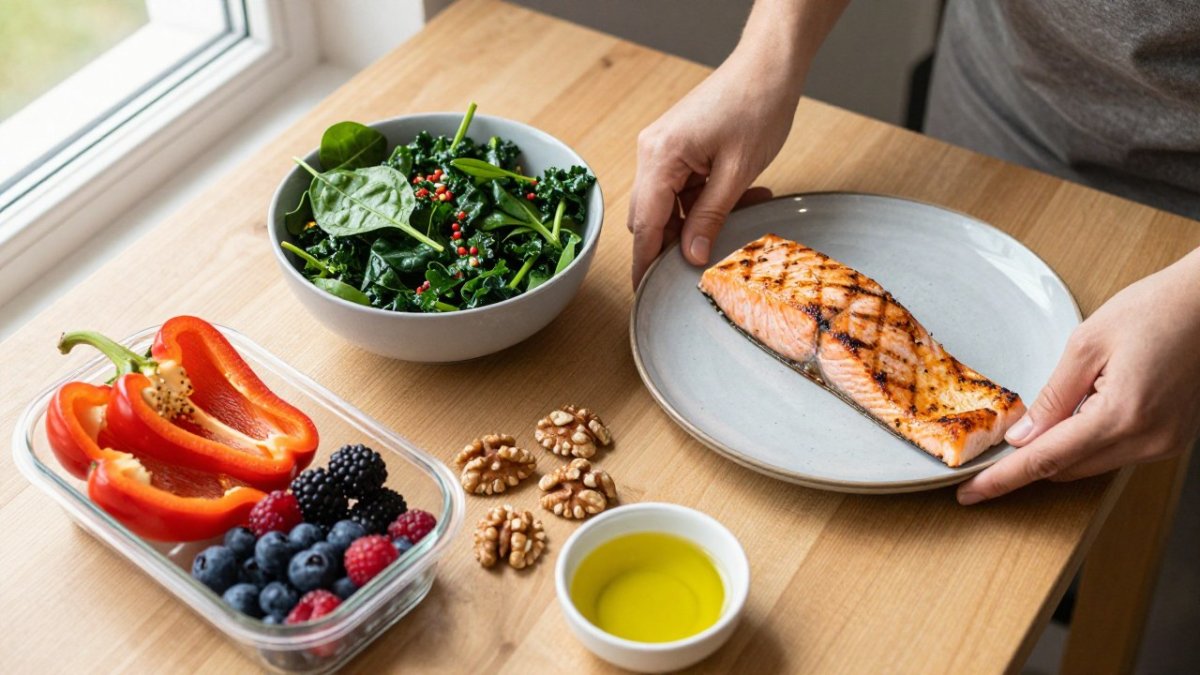
Here is a simple weekly framework you can adapt:
| Day Type | Protein | Produce | Fat | Spice |
|---|---|---|---|---|
| Fish day | Salmon or sardines | Spinach, tomatoes | Olive oil | Turmeric |
| Plant day | Walnuts, seeds | Kale, berries | Olive oil | Ginger |
| Mixed day | Tuna | Bell peppers, greens | Almonds | Black pepper |
To make this practical, here are three example meals that fit the plate:
- Breakfast: oatmeal topped with berries, walnuts, and a drizzle of olive oil or a spoon of ground flaxseed.
- Lunch: a large spinach and kale salad with canned sardines or chickpeas, bell peppers, tomatoes, and an olive oil and lemon dressing.
- Dinner: baked salmon with roasted broccoli and sweet potato, seasoned with turmeric, ginger, and black pepper.
Portions matter. A serving of fatty fish is about 3 to 4 ounces cooked. A serving of nuts is a small handful, roughly 1 ounce. Olive oil is easy to overpour, so measure 1 to 2 tablespoons per meal rather than free-pouring.
A simple shopping list for the week: canned sardines or salmon, frozen berries, bagged spinach or kale, bell peppers, tomatoes, walnuts or almonds, olive oil, turmeric, ginger, black pepper, oats, and frozen broccoli. Frozen and canned options are often more affordable.
If fresh fish is out of budget, canned sardines, canned salmon, and frozen fish fillets are affordable alternatives. Frozen berries and frozen spinach cost less than fresh and keep longer. Plant-based sources such as ground flaxseed and walnuts are one option for readers who do not eat fish.
Tracking can help. Noting pain and stiffness on a 0 to 10 scale once a week, along with what you ate, may be useful to bring to a clinician or dietitian.
Watch out: Cutting entire food groups without guidance can backfire, especially if you have diabetes, kidney disease, or a history of disordered eating. Get dietary advice before making big changes.
For broader nutrition and wellness guidance to put this plan into practice, see how to maximize your wellness efforts. And if you want to keep reading evidence-based articles on inflammation and joint health, browse our wellness blog.
Book a Consultation to Build Your Joint Health Plan
Diet is one starting point, but joint pain can have many causes. A consultation can help you discuss a plan that accounts for your history, lifestyle, and goals.
Trifecta Light Center offers full-body red light therapy, ionized alkaline water hydration, and metabolic analysis as drug-free, non-invasive wellness options. If you are ready to move beyond guesswork, schedule a consultation and build a plan that fits your life.
Joint pain is stubborn, and no single food will solve it. But the right combination of dietary changes and targeted, non-invasive support can make daily movement feel more manageable. Trifecta Light Center offers full-body red light therapy, ionized alkaline water hydration, and metabolic analysis to support your recovery from the inside out. Get started with Trifecta Light Center and take a more informed approach to your joint health.
Frequently Asked Questions
What foods fight joint pain and inflammation?
Fatty fish such as salmon, sardines, and tuna are the most studied inflammation reducing foods for joint pain because of their omega-3 fatty acids. Colorful produce (berries, bell peppers, tomatoes), leafy greens like spinach and kale, nuts and seeds, olive oil, and spices such as turmeric and ginger are commonly discussed in this context. Overall dietary pattern may matter more than any single food.
Which foods should I avoid if I have arthritis?
Foods to limit with arthritis commonly include heavily processed snacks, sugary drinks, fried foods, and excessive refined carbohydrates. Some people also notice flares with alcohol or specific trigger foods. A practical approach is to cut back on ultra-processed items first, keep a simple symptom log for a few weeks, and discuss any suspected trigger with your clinician before removing whole food groups.
How long does an anti-inflammatory diet take to affect joint pain?
Dietary changes are gradual. Responses to dietary changes vary widely between people. For quick relief during a flare, combine food changes with proven basics like rest, ice, and guidance from your doctor. Think of anti-inflammatory foods as a long-term support for joint health rather than a fast fix, and set expectations with your care team.
What is the strongest natural anti-inflammatory for joints?
No single food is the strongest, and claims of a miracle ingredient are usually overstated. Omega-3s from fatty fish are one food source studied in relation to joint health, and turmeric (curcumin) and ginger are used in many traditional remedies. If you are considering supplements, check with your clinician first, because they can interact with medications such as blood thinners. Food-first changes are the safer starting point.

