
Table of Contents
- How Red Light Therapy Reduces Inflammation
- Red Light Therapy Dosage and Frequency: Getting the Numbers Right
- How Long Does Red Light Therapy Take to Work?
- Red Light Therapy for Joint Pain: A Condition-Specific Protocol
- Red Light Therapy Side Effects and Who Should Avoid It
- How to Evaluate At-Home Devices and In-Studio Sessions
- Conclusion: Setting Realistic Expectations
- Frequently Asked Questions
Last Updated: October 13, 2026
How Red Light Therapy Reduces Inflammation
Red light therapy is a noninvasive treatment that uses specific wavelengths of red and near-infrared light to support the body’s own repair processes. At Trifecta Light Center, we explain how red light therapy reduces inflammation by targeting the way cells produce energy and manage stress. The therapy works on mitochondria, the tiny power plants inside your cells. When these power plants work better, your body handles swelling and pain more efficiently.
Inflammation is your body’s natural response to injury or infection. It becomes a problem when it lingers. A common approach in wellness studios is to pair light exposure with hydration and recovery tracking to support faster results.
The 4 key factors we cover, wavelength, dose, timing, and device quality, decide whether a session helps or does nothing.
The National Center for Biotechnology Information overview of photobiomodulation describes how light energy interacts with tissue at the cellular level.
What Happens at the Cellular Level
Light particles enter your skin and get absorbed by mitochondria. This triggers a boost in ATP production, the fuel your cells run on. More ATP means cells can repair damage and clear waste faster.
The process also releases nitric oxide, which improves blood flow and circulation. Better flow brings oxygen and nutrients to the treatment area while carrying away irritants. This is a key part of how red light therapy reduces inflammation.
Two other effects matter:
- Oxidative stress drops when cell signaling balances out
- Cell signaling pathways that control swelling become more efficient
Acute vs. Chronic Inflammation: Why the Distinction Matters
Acute inflammation is short-term. It shows up as redness, heat, and swelling after an injury, then fades. Chronic inflammation lasts weeks or months and quietly damages tissue. Conditions like rheumatoid arthritis, tendonitis, and carpal tunnel syndrome often involve this long-running type.
This distinction changes everything about treatment. Acute swelling responds quickly to light exposure. Chronic cases need consistent sessions over weeks. The Cleveland Clinic overview of inflammation explains how the two types differ in the body.
Red light therapy works best on inflammation tied to poor cellular energy and slow circulation. If your swelling comes from an active infection, treat the infection first.
Red Light Therapy Dosage and Frequency: Getting the Numbers Right
Dose decides results. Too little light does nothing. Too much can stall progress. The tricky part is that “dose” is not one number, it is the product of several variables, and changing any one of them changes what your tissue actually receives.
Four specs control your dose:
- Wavelength: red light (roughly 630-660 nm) is absorbed mostly in the skin and superficial tissue; near-infrared (roughly 810-850 nm) penetrates deeper into muscle and joint tissue
- Irradiance: the power hitting your skin at a given distance, measured in milliwatts per square centimeter (mW/cm²)
- Fluence: total energy delivered per session, measured in joules per square centimeter (J/cm²)
- Time and distance: how long you expose the area and how far the device sits from your skin
The relationship is simple math: fluence equals irradiance multiplied by time. A panel rated at 50 mW/cm² at 6 inches delivers 3 J/cm² in one minute. Move it to 12 inches and the irradiance may drop by roughly three-quarters because light spreads and weakens with distance, so the same minute now delivers a fraction of the dose. This is why a device’s “10-minute session” means nothing without a stated distance.
A common clinical range is a fluence of about 4 to 10 J/cm² per treatment area, 3-5 times per week. But that range assumes the device is measured at the distance you actually use it. Skin tone, hair density, and the depth of the target tissue all shift the effective dose too, darker skin and thicker tissue over a joint absorb more light before it reaches the target.
Reading Device Specs: Irradiance, Fluence, and Wavelength
Ignore marketing claims and check the spec sheet. Look for a stated wavelength in nanometers and a stated irradiance at a set distance. If a maker won’t publish those numbers, the device is a gamble.
| Spec | What It Tells You | What to Look For |
|---|---|---|
| Wavelength | How deep light reaches | 630-660 nm or 810-850 nm |
| Irradiance | Power at skin surface | Stated in mW/cm² at a specific distance |
| Fluence | Total dose per session | 4-10 J/cm² range |
| Treatment time | Session length | 10-20 minutes typical |
| Distance | Gap from device to skin | Matches the distance used for the irradiance rating |
A neutral checklist for any device:
- Does the spec sheet list irradiance in mW/cm² and the distance it was measured at?
- Does it name the exact wavelength (not just “red light”)?
- Is there a stated session time and a recommended distance?
- Does the maker avoid vague claims like “penetrates deep” without numbers?
If a device passes all four, you can estimate your fluence yourself. If it fails any, you cannot, and no amount of extra session time fixes an unknown dose.
More time is not better. Overdosing a treatment area can cancel the benefit and leave skin irritated. Follow the device’s stated session time and distance, and do not stack multiple devices on the same area without accounting for the combined dose.
Dose is irradiance times time, adjusted for distance. Before you trust any session length, find the irradiance rating and the distance it was measured at, that single number pair tells you more than any marketing claim.
How Long Does Red Light Therapy Take to Work?
Most people notice a change in pain relief and swelling within a few weeks of consistent use. Collagen production and skin texture shifts often take several weeks. Wound healing and tissue repair timelines depend on the injury.
The honest answer is that treatment effectiveness builds with repetition. Skipping days slows the process.
Red Light Therapy for Joint Pain: A Condition-Specific Protocol
For joint pain, consistency beats intensity. A practical protocol targets the joint directly with near-infrared light. Keep the panel close enough to feel gentle warmth, never heat.
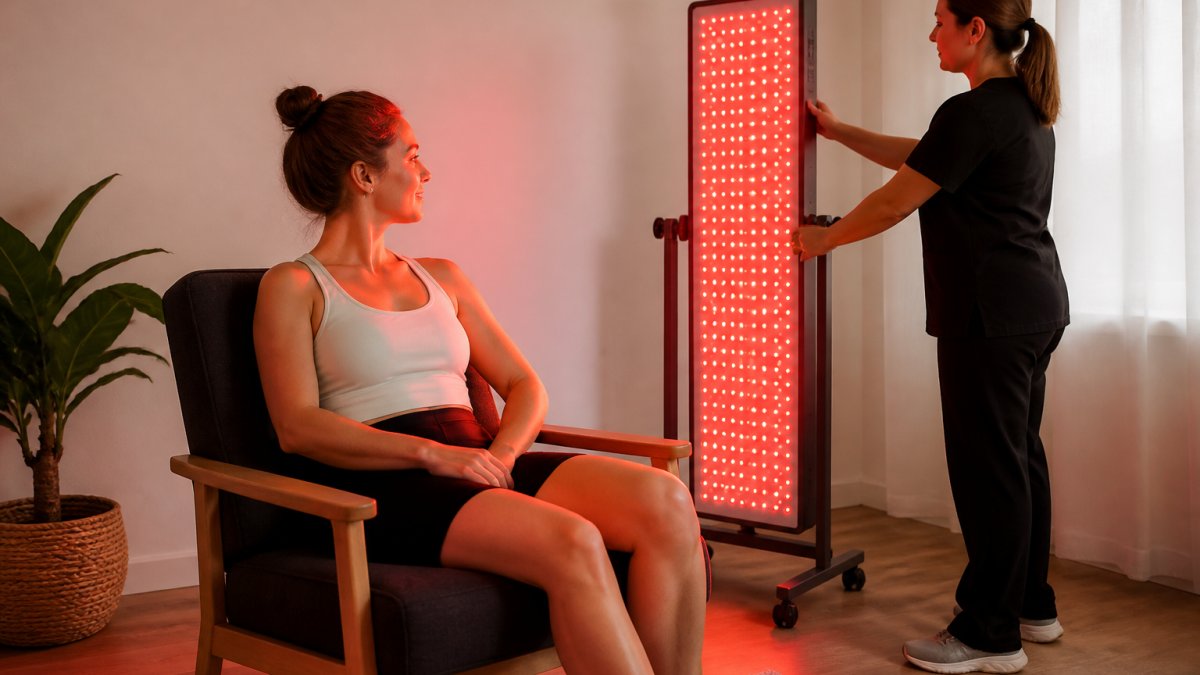
A condition-specific plan may involve:
- Warming the area with light movement
- Exposing the joint to near-infrared light
- Hydrating well after the session
For muscle recovery, the same approach applies to larger areas. For tendonitis and carpal tunnel syndrome, aim the light at the affected tendon or wrist.
Red Light Therapy Side Effects and Who Should Avoid It
Red light therapy side effects are usually mild and short-lived. The most common are temporary redness, warmth, or a slight headache or dizziness after a session. These typically fade within hours. Rarely, someone with sensitive skin may notice a rash or a flare of irritation at the treatment site.
The bigger issue is not side effects, it is contraindications. Light that interacts with your cells can also interact with medications and medical conditions, and most consumer guides skip this entirely.
Medications That Increase Light Sensitivity
Certain drugs make your skin and eyes react more strongly to light. This is called photosensitivity, and it can turn a normally gentle session into a burn or rash. Common categories to discuss with a clinician or pharmacist before your first session include:
- Some antibiotics, particularly tetracyclines and fluoroquinolones (pubmed.ncbi.nlm.nih.gov)
- Isotretinoin and some acne treatments
- Certain diuretics and blood pressure medications
- Some antidepressants and antipsychotics
- Topical retinoids and some skincare acids
- St. John’s wort and certain herbal supplements
This is not a complete list. The practical rule: tell your provider about every prescription, over-the-counter drug, and supplement you take, and ask whether any of them increase light sensitivity.
Conditions and Situations That Warrant Caution
Talk to a qualified professional first if you:
- Have active skin cancer or a suspicious lesion in the treatment area
- Are pregnant, evidence on light therapy during pregnancy is limited, so most clinicians advise caution
- Have a condition affected by light exposure, such as lupus or porphyria
- Have a history of seizures triggered by flashing or bright light
- Are treating an area with an active infection, open wound, or recent surgery
Eye Protection and Light Exposure
Bright panels emit intense light, and near-infrared is invisible, you cannot judge exposure by how bright it looks. Never stare directly into the light. Protective goggles are recommended when treating the face or when using a high-irradiance panel. If you have any eye condition, check with an eye care professional first.
When to Stop
Stop a session and contact a clinician if you notice:
- A burn, blister, or rash that does not fade within a day
- Increasing pain or swelling in the treatment area
- Eye discomfort, blurred vision, or persistent headache
- Any new symptom that concerns you
Certain medications, including some antibiotics and acne treatments, increase light sensitivity. Tell your provider about every medication and supplement before your first session, and if you are unsure, ask a pharmacist, who can flag photosensitivity risks quickly.
Red light therapy is generally well tolerated, but “generally” is not “always.” The real safety work happens before the session: review your medications for photosensitivity, protect your eyes, and get clearance if you are pregnant or have a light-sensitive condition.
How to Evaluate At-Home Devices and In-Studio Sessions
At-home devices are convenient. Professional treatment delivers higher irradiance and covers more of the body at once. The right choice depends on your goal and how much time you have.
Ask these questions before buying or booking:
- Does the device publish its wavelength and irradiance?
- How large is the treatment area per session?
- Is there a dose guideline, or just vague claims?
- Can staff explain the difference between red and near-infrared wavelengths?
For chronic inflammation or a stubborn joint, in-studio sessions may deliver a more consistent dose. At-home panels can be used for maintenance between visits.
Conclusion: Setting Realistic Expectations
The challenge with any light therapy is patience. Results build quietly over weeks, and the people who see the biggest change are the ones who stay consistent. Trifecta Light Center pairs full-body red light therapy with ionized alkaline water, Pnoe breath analysis, and Styku 3D body scanning to support recovery from the inside out. Our non-invasive, drug-free approach helps you track real progress instead of guessing. Book an appointment with Trifecta Light Center.
Frequently Asked Questions
How long does it take red light therapy to reduce inflammation?
Most people notice reduced swelling and soreness within 2-4 weeks of consistent sessions, though this varies by condition and dose. Acute injuries often respond faster than chronic conditions like rheumatoid arthritis, which may need 8-12 weeks. Track changes in pain, range of motion, and swelling rather than expecting overnight results, and give any protocol at least four weeks before judging whether it’s working for you.
Can you overdo red light therapy for joints?
Yes. More isn’t better with photobiomodulation. Exceeding the effective dose can blunt results or cause temporary soreness, and the response curve is biphasic, meaning too much light reverses the benefit. Stick to the device’s recommended session length, avoid treating the same joint more than once daily, and give your body rest days. If a joint feels worse after sessions rather than better, reduce frequency before abandoning the treatment.
Where should you not do red light therapy?
Avoid treating the eyes directly without protective goggles, and skip the thyroid area, active cancer sites, and pregnant abdomen unless a qualified clinician clears it. People taking photosensitizing medications, such as certain antibiotics or isotretinoin, should consult their prescriber first. Tattooed skin and recently injected areas also warrant caution, since light absorption and skin sensitivity can differ there.
Is red light therapy effective for joint inflammation?
Red and near-infrared wavelengths reach joint tissue at different depths, so a device with both wavelengths may serve joint pain better than a red-only panel.
