

Last Updated: November 19, 2026
Quick Summary
To increase energy with iron deficiency, get a blood test first, then pair iron-rich foods and supplements with vitamin C while keeping tea, coffee, and calcium at least an hour away. Rebuilding iron stores takes several months, so add pacing, light movement, and seven to nine hours of sleep while your ferritin levels recover.
- A ferritin test is the better early warning signal, because stores drop before hemoglobin does.
- Pair non-heme iron with citrus, bell peppers, or tomatoes, and keep tea, coffee, and calcium away by at least an hour.
- Take iron supplements with a vitamin C source and follow your clinician’s guidance on dose and timing.
- Ferritin levels can take several months to normalize, so recheck blood work as your clinician advises.
- Keep exercise easy and short while iron is low, and aim for seven to nine hours of sleep.
Table of Contents
- Why Iron Deficiency Leaves You Exhausted
- Symptoms That Confirm Low Iron Is Behind Your Fatigue
- Getting an Iron Deficiency Test Before You Self-Treat
- Iron-Rich Foods for Fatigue: Building Meals That Actually Absorb
- Iron Supplements and Vitamin C: Pairing Them Correctly
- Iron Deficiency Treatment Options and What to Expect
- Pacing, Movement and Sleep: Daily Habits That Protect Your Energy
- Planning Your Energy Recovery with Trifecta Light Center
- Frequently Asked Questions
Why Iron Deficiency Leaves You Exhausted
Iron deficiency drains your energy because iron is the raw material your body uses to build hemoglobin, the protein that carries oxygen through your blood. When iron stores run low, less oxygen reaches your muscles and brain. The result is the heavy, foggy tiredness that no amount of coffee fixes.
This guide walks through how to increase energy with iron deficiency in a structured way. We cover testing, food pairing, supplements, pacing, and the daily habits that protect your energy while your iron stores rebuild.
Here is the part most guides get wrong. Low iron is not just a diet problem. Absorption, blood loss, and how you pace your days all shape how fast you feel better.
Symptoms That Confirm Low Iron Is Behind Your Fatigue
Fatigue from iron deficiency has a distinct pattern. It shows up as breathlessness on stairs, a racing heart with light activity, and a foggy head that gets worse as the day goes on. Cold hands, brittle nails, and unusual cravings for ice are common too.
But symptoms alone cannot confirm iron deficiency. Many conditions cause chronic exhaustion, including thyroid problems and sleep disorders. A blood test is the only way to know.
Track your symptoms for two weeks before your appointment. Note when energy dips, what you ate, and how you slept. That log gives your clinician real data to work with.
Getting an Iron Deficiency Test Before You Self-Treat
Start with a blood test before you buy any supplement. A complete blood count measures hemoglobin levels, and a ferritin test shows how much iron you have in storage. Ferritin is the better early warning signal, because stores drop before hemoglobin does.
Many people start iron pills on a hunch. That is a mistake. Taking iron when you do not need it can cause constipation and mask other problems.
If you want to track how your body responds before and after testing, you can measure your vitals from breath at our studio. It gives you a baseline for energy and metabolic function to compare against later.
Ask your clinician which tests apply to you. The National Heart, Lung, and Blood Institute on iron-deficiency anemia explains what each blood marker measures.
Iron-Rich Foods for Fatigue: Building Meals That Actually Absorb
The best iron-rich foods for fatigue come in two forms. Heme iron comes from meat, poultry, and fish and absorbs easily. Non-heme iron comes from plants like lentils, spinach, and fortified cereals and needs help to absorb well.
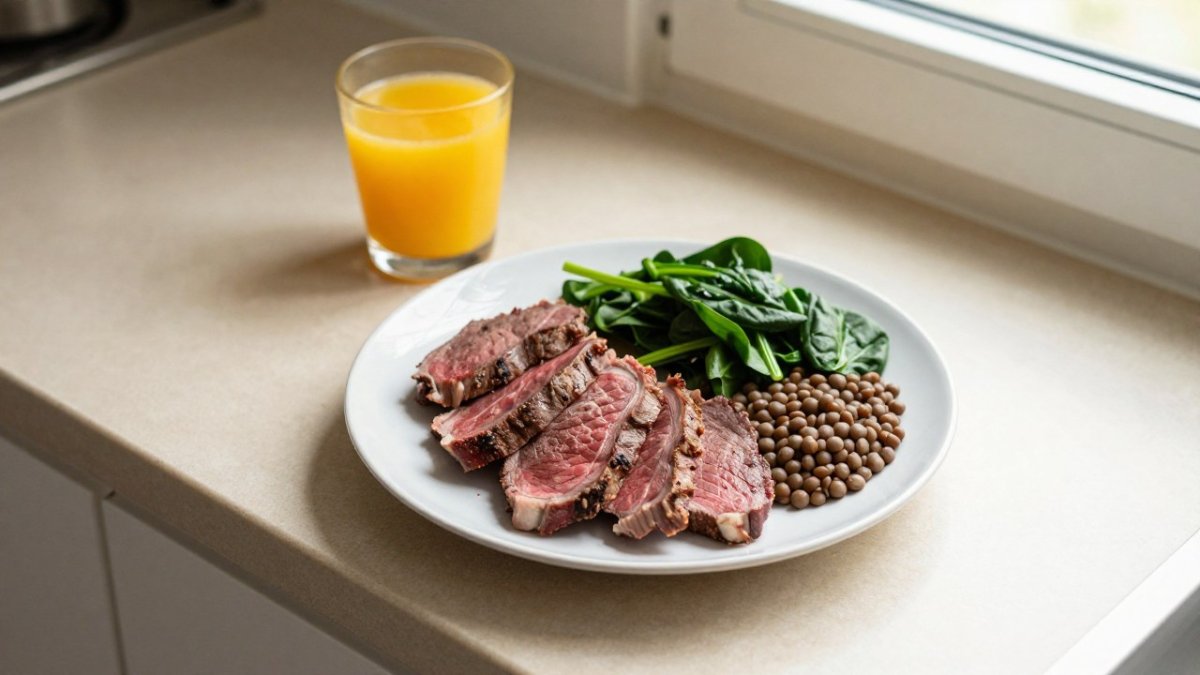
Pairing matters more than quantity. Vitamin C boosts absorption of non-heme iron, so add citrus, bell peppers, or tomatoes to plant-based meals. Tea, coffee, and calcium block absorption, so keep them away from iron-rich meals by at least an hour.
A simple plate looks like this:
- Lean red meat or lentils as the iron base
- Spinach or fortified grains alongside
- Citrus fruit or peppers for vitamin C
- Coffee or tea saved for later
Here is a sample day:
- Breakfast: fortified cereal with orange juice; coffee saved for mid-morning
- Lunch: lentil soup with bell peppers and a glass of citrus juice; tea in the afternoon
- Dinner: lean red meat with spinach and tomatoes; calcium supplement moved to bedtime
- Snacks: dried fruit or nuts, kept away from tea and coffee
This structure does two things at once: it raises absorption and removes the timing mistakes that quietly cancel the benefit of iron-rich meals. For more structured meal support, our nutrition services help you build a food plan around absorption, not just iron counts.
Pairing and timing decide how much iron you actually absorb from a meal. (Source: Office of Dietary Supplements)
| Element | Example | Effect on absorption |
|---|---|---|
| Heme iron | Meat, poultry, fish | Absorbs easily |
| Non-heme iron | Lentils, spinach, fortified cereals | Needs help to absorb well |
| Vitamin C | Citrus, bell peppers, tomatoes | Boosts non-heme iron absorption |
| Tea, coffee, calcium | Drinks and supplements | Block absorption; keep away at least an hour |
Iron Supplements and Vitamin C: Pairing Them Correctly
Iron supplements and vitamin C work best together. Take your supplement with a source of vitamin C, such as orange juice, to improve absorption. Avoid taking it with coffee, tea, antacids, or calcium supplements.
Dosing frequency matters too. Some clinicians recommend alternate-day dosing; follow your own clinician’s guidance on dose and timing. Follow your own clinician’s guidance on dose and timing.
Watch out: taking iron with milk or within an hour of coffee cancels much of the benefit. Move those drinks to a different part of your day.
Iron Deficiency Treatment Options and What to Expect
Iron deficiency treatment usually starts with oral supplements and dietary changes. Rebuilding iron stores takes longer than symptom relief. Ferritin levels can take several months to normalize.
Your clinician may recheck blood work after a set period to confirm progress. If oral iron does not work or causes side effects, other options exist, including intravenous iron in some cases. Only a clinician can decide which path fits you.
For related reading on recovery and wellness, browse our blog for more guidance.
Pacing, Movement and Sleep: Daily Habits That Protect Your Energy
Pacing is the habit most people skip, and it matters most. Energy conservation means breaking tasks into short blocks with rest between them, rather than pushing through a long day and crashing. A practical framework is the “energy envelope”: rate each activity from 1 to 10 for effort, and keep your total daily effort below the level that triggered your last crash. Energy often dips later in the day, so scheduling demanding tasks earlier can help.
Movement still helps. Light activity like walking supports blood flow and stamina without draining you. The key is intensity: keep exercise easy and short while your iron is low, and build up as energy returns. Skip high-intensity sessions until your levels improve.
Watch out: if you feel dizzy, breathless at rest, or more exhausted the day after exercise, cut the duration and intensity rather than pushing through.
Restorative sleep is the other pillar. Keep a consistent bedtime, dim screens an hour before bed, and aim for seven to nine hours. If you want to work on sleep quality alongside energy recovery, see how to think better, sleep better, and feel more refreshed.
A day-in-the-life pacing plan might look like this:
- Morning: hardest tasks in 45-minute blocks with 10-minute rests
- Midday: a short walk and a meal that pairs iron with vitamin C
- Afternoon: lighter tasks, with a 20-minute rest if energy dips
- Evening: screens dimmed, consistent bedtime
Planning Your Energy Recovery with Trifecta Light Center
Recovery from iron deficiency is a plan, not a single fix. Food, supplements, pacing, and sleep all work together, and tracking your progress keeps you honest about what is working.
At Trifecta Light Center, we support that plan with non-invasive, drug-free therapies. Our full-body red light therapy supports cellular energy and tissue recovery. Ionized alkaline water supports hydration. Pnoe breath analysis and Styku 3D body scanning are available as part of your visit.
If you are ready to build your recovery plan, schedule a session and we will help you map the next steps.
Low iron fatigue is stubborn, but it is manageable with the right sequence: test first, fix absorption, then protect your energy while stores rebuild. Trifecta Light Center can support that work with red light therapy, breath analysis, and body scanning that track your progress. Get started with Trifecta Light Center and give your recovery a measurable plan.
Frequently Asked Questions
How long does it take to feel better after starting iron treatment?
Most people notice some improvement in fatigue within two to four weeks of starting treatment, but full recovery of iron stores takes longer. Hemoglobin levels often rise first, while ferritin, the protein that stores iron, can take three to six months or more to rebuild. Your doctor will usually recheck levels after a few months to confirm the treatment is working. If nothing changes after four to six weeks, ask about retesting, because the dose or the cause may need a second look.
What should you avoid eating or drinking with iron supplements?
Calcium, found in milk, cheese and many antacids, blocks iron absorption, so take supplements at a different time. Coffee and tea contain tannins that reduce uptake, so wait at least an hour. Certain medications, including some antibiotics and acid reducers, also interfere, which is why timing matters. On the other hand, vitamin C helps: a glass of orange juice or a vitamin C supplement taken with the dose can improve how much iron you absorb. Ask your pharmacist about interactions with anything else you take.
Can you increase iron levels naturally without supplements?
Diet alone can improve mild deficiency, especially when you combine heme iron from meat, poultry and fish with non-heme iron from lentils, spinach and fortified cereals. Pairing plant sources with vitamin C boosts absorption, while avoiding coffee, tea and calcium at the same meal removes common inhibitors. That said, if your ferritin is very low or you have heavy periods or gut issues, food alone is often too slow. An iron deficiency test tells you how low you are and whether diet, supplements or another iron deficiency treatment is the right starting point.
When should I see a doctor for iron deficiency fatigue?
Book a medical consultation if fatigue persists despite sleep, worsens over weeks, or comes with shortness of breath, dizziness, pale skin, cold hands, brittle nails or unusual cravings for ice or dirt. These can signal more advanced deficiency. Get checked promptly if you have heavy menstrual bleeding, a history of gastrointestinal bleeding, or follow a vegetarian or vegan diet. A simple blood panel measuring hemoglobin and ferritin confirms the diagnosis, and a doctor can rule out other causes of chronic exhaustion before you start supplements.

